How to Design a Small Optical Retail Store:
A Beginner-Friendly Guide for Indian Entrepreneurs
BLOG
How to Design a Small Optical Retail Store
A Beginner-Friendly Guide for Indian Entrepreneurs
Give color power to your exquisite designs
A Beginner-Friendly Guide for Indian Entrepreneurs
How to Design a Small Optical Retail Store
Introduction: Why Store Design Matters in Indian Optical Retail
In the rapidly evolving Indian eyewear market, the design of your optical retail store is more than just an aesthetic choice – it is a strategic business decision. For first-time store owners, especially those working with compact spaces (150–500 sq ft), a well-thought-out design can be the difference between a thriving business and one that struggles to attract and retain customers. This blog post aims to demystify the process of designing a small optical retail store in India, offering practical, actionable advice on layout, customer flow, zoning, signage, lighting, furniture, and display strategies. Drawing on the latest industry insights, Indian market trends, and proven retail design principles, this guide will help you create a store that is not only functional and efficient but also inviting and memorable for your customers.
Give color power to your exquisite designs
Give color power to your exquisite designs
Understanding the Indian Optical Retail Market
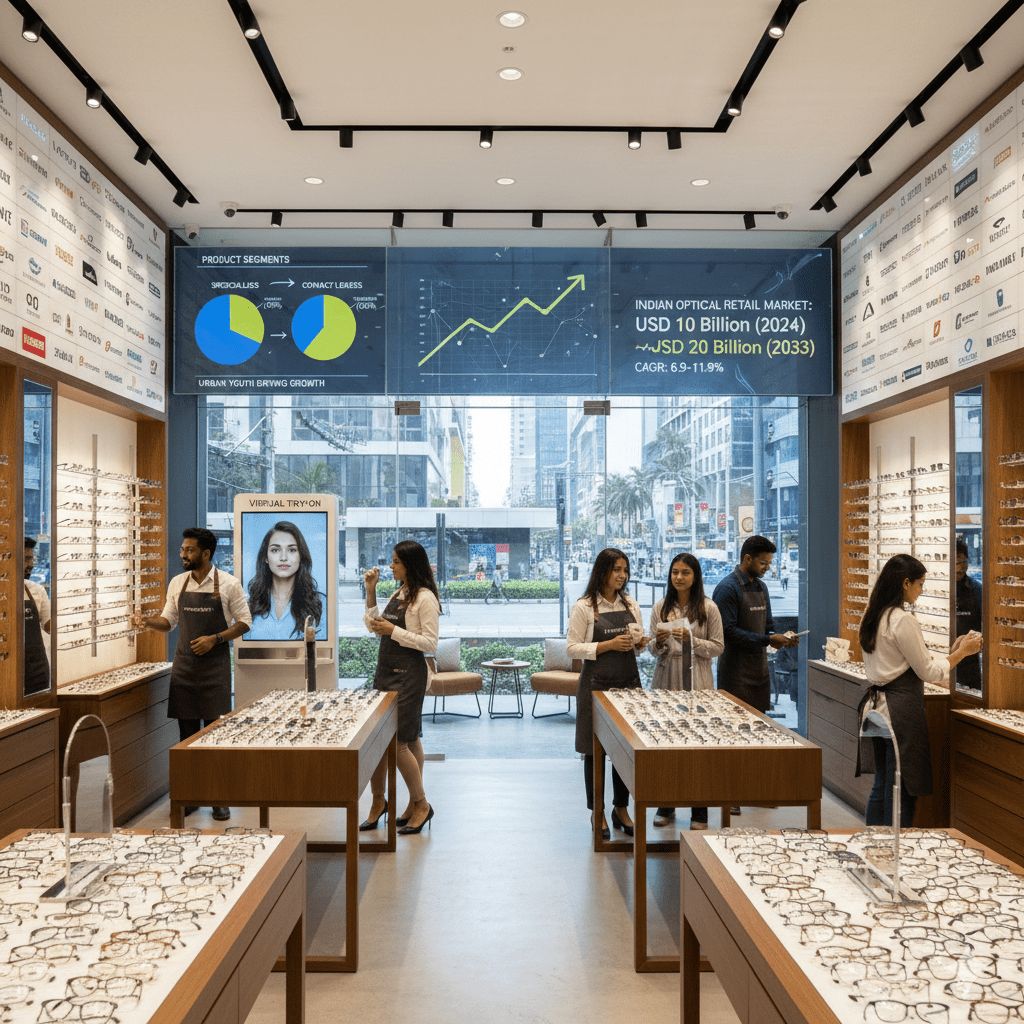
The Indian eyewear market is experiencing robust growth, driven by increasing urbanization, rising disposable incomes, greater awareness of eye health, and a growing appetite for fashionable eyewear. As of 2024, the market is valued at over USD 10 billion and is projected to nearly double by 2033, with a CAGR of 6.9–11.9%. Spectacles remain the dominant product, but sunglasses and contact lenses are rapidly gaining popularity, especially among urban youth and professionals. Major players like Lenskart, Titan Eye+, Specsmakers, and Cleardekho have expanded aggressively, but the market remains highly fragmented, with thousands of independent stores serving diverse customer segments across metros, tier-2/3 cities, and rural areas.
For new entrants, this means opportunity and competition. Customers expect not just quality products and eye care services, but also a modern, comfortable, and engaging in-store experience. The rise of e-commerce and virtual try-on tools has raised the bar for physical stores, making thoughtful design and customer-centric layouts essential for success.
How to Design a Small Optical Retail Store
How to Design a Small Optical Retail Store
Choosing the Right Location and Storefront
Location is the foundation of retail success. In India, high-footfall areas such as busy markets, shopping complexes, near hospitals, or educational institutions are ideal for optical stores. Visibility and accessibility are crucial – your store should be easy to spot from the street and convenient for walk-in customers, including seniors and people with disabilities.
Key considerations for selecting a location:
- Foot traffic: Proximity to complementary businesses (clinics, pharmacies, salons) increases potential customer flow.
- Visibility: A prominent storefront with clear signage draws attention.
- Accessibility: Ensure step-free entry and wide doors for wheelchair access.
- Safety: Well-lit surroundings and secure neighborhoods foster trust.
Storefront design tips:
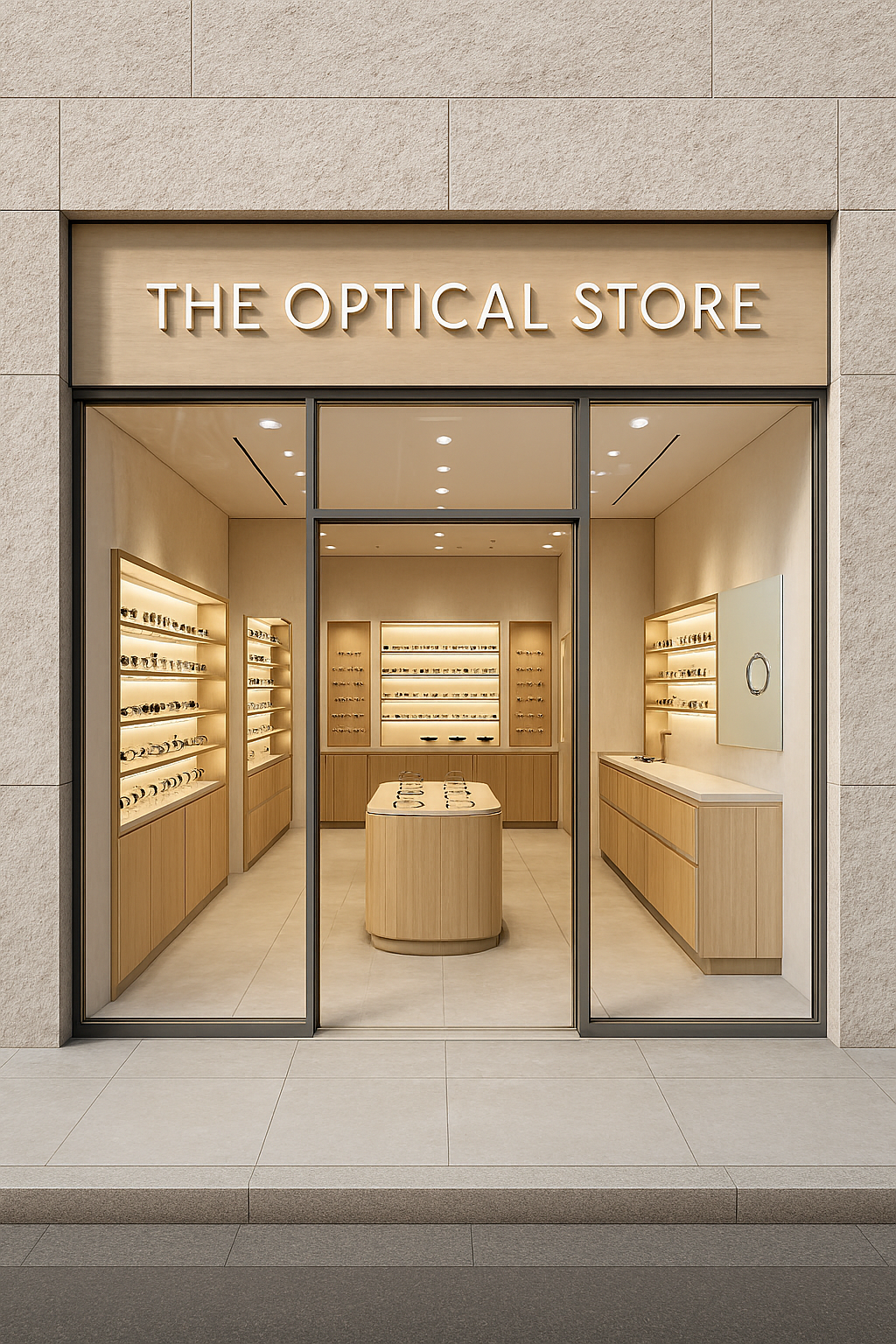
- Use large, clean glass windows to showcase your best frames and create an open, inviting look.
- Incorporate your brand colors and logo prominently.
- Consider LED-lit signage for 24/7 visibility, especially in crowded markets.
A well-designed storefront not only attracts passersby but also sets the tone for the experience inside. In India’s competitive retail landscape, a distinctive, professional façade can help your store stand out from the crowd.
-
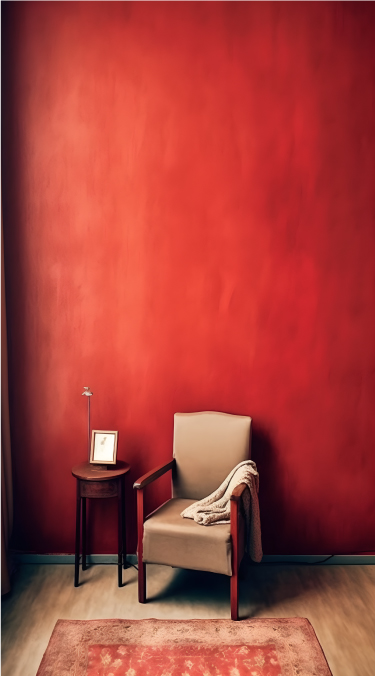
- 60-30-10 rule: This states 60% of the design should be covered with dominant color, 30% with secondary color or texture, and 10% with an accent.
Generally, the dominant and secondary colors should be neutral colors and you should use the accent color for highlighting and making things stand out in your design. Like we can have a red CTA (call to action) in a white, black design. - Tweaking your colors: Now as you have applied the rule to select the colors in your design, you can now make changes in the colors by using their variations.
Use and make them appealing, there is no rule as to what will appeal, you can use as many variations as you want as per the requirements. - Consistency with the colors: Now as you have made one design with the color pallet. Stick to this color pallet to use it in all your designs with variations only if needed. This will help you establish a brand presence.
- 60-30-10 rule: This states 60% of the design should be covered with dominant color, 30% with secondary color or texture, and 10% with an accent.
Give color power to your exquisite designs
Give color power to your exquisite designs
Give color power to your exquisite designs
Give color power to your exquisite designs
-
- 60-30-10 rule: This states 60% of the design should be covered with dominant color, 30% with secondary color or texture, and 10% with an accent.
Generally, the dominant and secondary colors should be neutral colors and you should use the accent color for highlighting and making things stand out in your design. Like we can have a red CTA (call to action) in a white, black design. - Tweaking your colors: Now as you have applied the rule to select the colors in your design, you can now make changes in the colors by using their variations.
Use and make them appealing, there is no rule as to what will appeal, you can use as many variations as you want as per the requirements. - Consistency with the colors: Now as you have made one design with the color pallet. Stick to this color pallet to use it in all your designs with variations only if needed. This will help you establish a brand presence.
- 60-30-10 rule: This states 60% of the design should be covered with dominant color, 30% with secondary color or texture, and 10% with an accent.
Give color power to your designs
Give color power to your designs
-
- 60-30-10 rule: This states 60% of the design should be covered with dominant color, 30% with secondary color or texture, and 10% with an accent.
Generally, the dominant and secondary colors should be neutral colors and you should use the accent color for highlighting and making things stand out in your design. Like we can have a red CTA (call to action) in a white, black design. - Tweaking your colors: Now as you have applied the rule to select the colors in your design, you can now make changes in the colors by using their variations.
Use and make them appealing, there is no rule as to what will appeal, you can use as many variations as you want as per the requirements. - Consistency with the colors: Now as you have made one design with the color pallet. Stick to this color pallet to use it in all your designs with variations only if needed. This will help you establish a brand presence.
- 60-30-10 rule: This states 60% of the design should be covered with dominant color, 30% with secondary color or texture, and 10% with an accent.
Give color power to your designs
Give color power to your designs
-
- 60-30-10 rule: This states 60% of the design should be covered with dominant color, 30% with secondary color or texture, and 10% with an accent.
Generally, the dominant and secondary colors should be neutral colors and you should use the accent color for highlighting and making things stand out in your design. Like we can have a red CTA (call to action) in a white, black design. - Tweaking your colors: Now as you have applied the rule to select the colors in your design, you can now make changes in the colors by using their variations.
Use and make them appealing, there is no rule as to what will appeal, you can use as many variations as you want as per the requirements. - Consistency with the colors: Now as you have made one design with the color pallet. Stick to this color pallet to use it in all your designs with variations only if needed. This will help you establish a brand presence.
- 60-30-10 rule: This states 60% of the design should be covered with dominant color, 30% with secondary color or texture, and 10% with an accent.
Give color power to your designs
How to select powerful colors for your designs
Give color power to your designs
How to select powerful colors for your designs
-
- 60-30-10 rule: This states 60% of the design should be covered with dominant color, 30% with secondary color or texture, and 10% with an accent.
Generally, the dominant and secondary colors should be neutral colors and you should use the accent color for highlighting and making things stand out in your design. Like we can have a red CTA (call to action) in a white, black design. - Tweaking your colors: Now as you have applied the rule to select the colors in your design, you can now make changes in the colors by using their variations.
Use and make them appealing, there is no rule as to what will appeal, you can use as many variations as you want as per the requirements. - Consistency with the colors: Now as you have made one design with the color pallet. Stick to this color pallet to use it in all your designs with variations only if needed. This will help you establish a brand presence.
- 60-30-10 rule: This states 60% of the design should be covered with dominant color, 30% with secondary color or texture, and 10% with an accent.
How to select powerful colors for your designs
Give color power to your designs
Give color power to your designs
How to select powerful colors for your designs
Give color power to your designs
How to select powerful colors for your designs
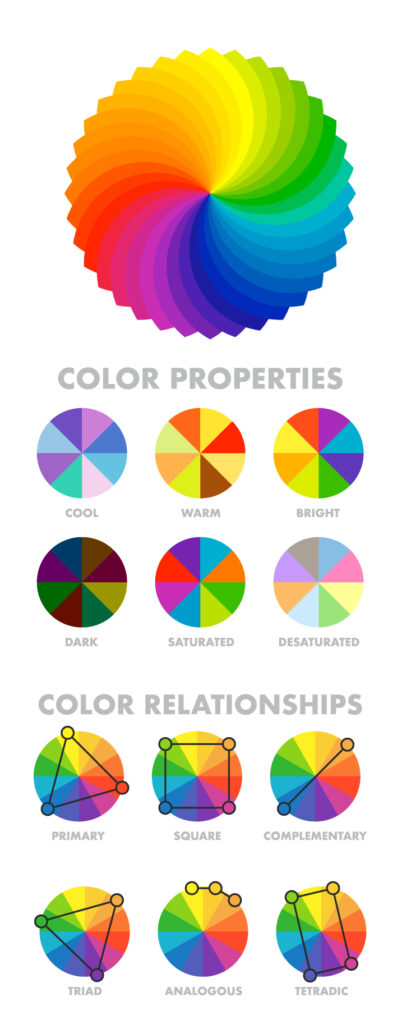
- Analogous Harmony:
When viewed together, these colors give a pleasing, serene appearance. These colors are present next to each other on the color wheel.
The most common example is violet, red-violet, and red. These 3 colors represent analogous harmonies. In lay mans language little bit of shade right and left on the color wheel. - Complementary Harmony:
Contrasting colors are often termed complementary harmonies. They are present on the opposite side of the color wheel. Red and green are the most common example of this kind of harmony. - Split-Complementary Harmony:
Using one base color and 2 complementary colors are generally termed as Split complementary colors. Here instead of one complementary color, two colors are picked symmetrically around it on the color wheel. e.g Orange, Blue-green, Blue-purple - Triadic Harmony:
Here we select three colors located at equal distances from each other on the color wheel. These selected colors are evenly spaced throughout the wheel. These color often creates a pleasing set of appearance when used together. e.g. Primary colors – red, blue, and yellow. - Monochromatic Harmony:
Selecting colors from a hue, and its various tints, tones, and shades associated. Shades are sometimes been derived by adding a tint of white, grey, and black to make a pallet.
- Analogous Harmony:
Give color power to your designs
How to select powerful colors for your designs
Give color power to your designs
How to select powerful colors for your designs
- Analogous Harmony:
When viewed together, these colors give a pleasing, serene appearance. These colors are present next to each other on the color wheel.
The most common example is violet, red-violet, and red. These 3 colors represent analogous harmonies. In lay mans language little bit of shade right and left on the color wheel. - Complementary Harmony:
Contrasting colors are often termed complementary harmonies. They are present on the opposite side of the color wheel. Red and green are the most common example of this kind of harmony. - Split-Complementary Harmony:
Using one base color and 2 complementary colors are generally termed as Split complementary colors. Here instead of one complementary color, two colors are picked symmetrically around it on the color wheel. e.g Orange, Blue-green, Blue-purple - Triadic Harmony:
Here we select three colors located at equal distances from each other on the color wheel. These selected colors are evenly spaced throughout the wheel. These color often creates a pleasing set of appearance when used together. e.g. Primary colors – red, blue, and yellow. - Monochromatic Harmony:
Selecting colors from a hue, and its various tints, tones, and shades associated. Shades are sometimes been derived by adding a tint of white, grey, and black to make a pallet.
- Analogous Harmony:
Give color power to your designs
How to select powerful colors for your designs
Give color power to your designs
How to select powerful colors for your designs
- Analogous Harmony:
When viewed together, these colors give a pleasing, serene appearance. These colors are present next to each other on the color wheel.
The most common example is violet, red-violet, and red. These 3 colors represent analogous harmonies. In lay mans language little bit of shade right and left on the color wheel. - Complementary Harmony:
Contrasting colors are often termed complementary harmonies. They are present on the opposite side of the color wheel. Red and green are the most common example of this kind of harmony. - Split-Complementary Harmony:
Using one base color and 2 complementary colors are generally termed as Split complementary colors. Here instead of one complementary color, two colors are picked symmetrically around it on the color wheel. e.g Orange, Blue-green, Blue-purple - Triadic Harmony:
Here we select three colors located at equal distances from each other on the color wheel. These selected colors are evenly spaced throughout the wheel. These color often creates a pleasing set of appearance when used together. e.g. Primary colors – red, blue, and yellow. - Monochromatic Harmony:
Selecting colors from a hue, and its various tints, tones, and shades associated. Shades are sometimes been derived by adding a tint of white, grey, and black to make a pallet.
- Analogous Harmony:
Give color power to your designs
How to select powerful colors for your designs
Give color power to your designs
How to select powerful colors for your designs
- Analogous Harmony:
When viewed together, these colors give a pleasing, serene appearance. These colors are present next to each other on the color wheel.
The most common example is violet, red-violet, and red. These 3 colors represent analogous harmonies. In lay mans language little bit of shade right and left on the color wheel. - Complementary Harmony:
Contrasting colors are often termed complementary harmonies. They are present on the opposite side of the color wheel. Red and green are the most common example of this kind of harmony. - Split-Complementary Harmony:
Using one base color and 2 complementary colors are generally termed as Split complementary colors. Here instead of one complementary color, two colors are picked symmetrically around it on the color wheel. e.g Orange, Blue-green, Blue-purple - Triadic Harmony:
Here we select three colors located at equal distances from each other on the color wheel. These selected colors are evenly spaced throughout the wheel. These color often creates a pleasing set of appearance when used together. e.g. Primary colors – red, blue, and yellow. - Monochromatic Harmony:
Selecting colors from a hue, and its various tints, tones, and shades associated. Shades are sometimes been derived by adding a tint of white, grey, and black to make a pallet.
- Analogous Harmony:
Give color power to your designs
How to select powerful colors for your designs
Give color power to your designs
How to select powerful colors for your designs
- Analogous Harmony:
When viewed together, these colors give a pleasing, serene appearance. These colors are present next to each other on the color wheel.
The most common example is violet, red-violet, and red. These 3 colors represent analogous harmonies. In lay mans language little bit of shade right and left on the color wheel. - Complementary Harmony:
Contrasting colors are often termed complementary harmonies. They are present on the opposite side of the color wheel. Red and green are the most common example of this kind of harmony. - Split-Complementary Harmony:
Using one base color and 2 complementary colors are generally termed as Split complementary colors. Here instead of one complementary color, two colors are picked symmetrically around it on the color wheel. e.g Orange, Blue-green, Blue-purple - Triadic Harmony:
Here we select three colors located at equal distances from each other on the color wheel. These selected colors are evenly spaced throughout the wheel. These color often creates a pleasing set of appearance when used together. e.g. Primary colors – red, blue, and yellow. - Monochromatic Harmony:
Selecting colors from a hue, and its various tints, tones, and shades associated. Shades are sometimes been derived by adding a tint of white, grey, and black to make a pallet.
- Analogous Harmony:
Give color power to your designs
How to select powerful colors for your designs
Store Size Planning and Zoning for Small Shops (150–500 sq ft)
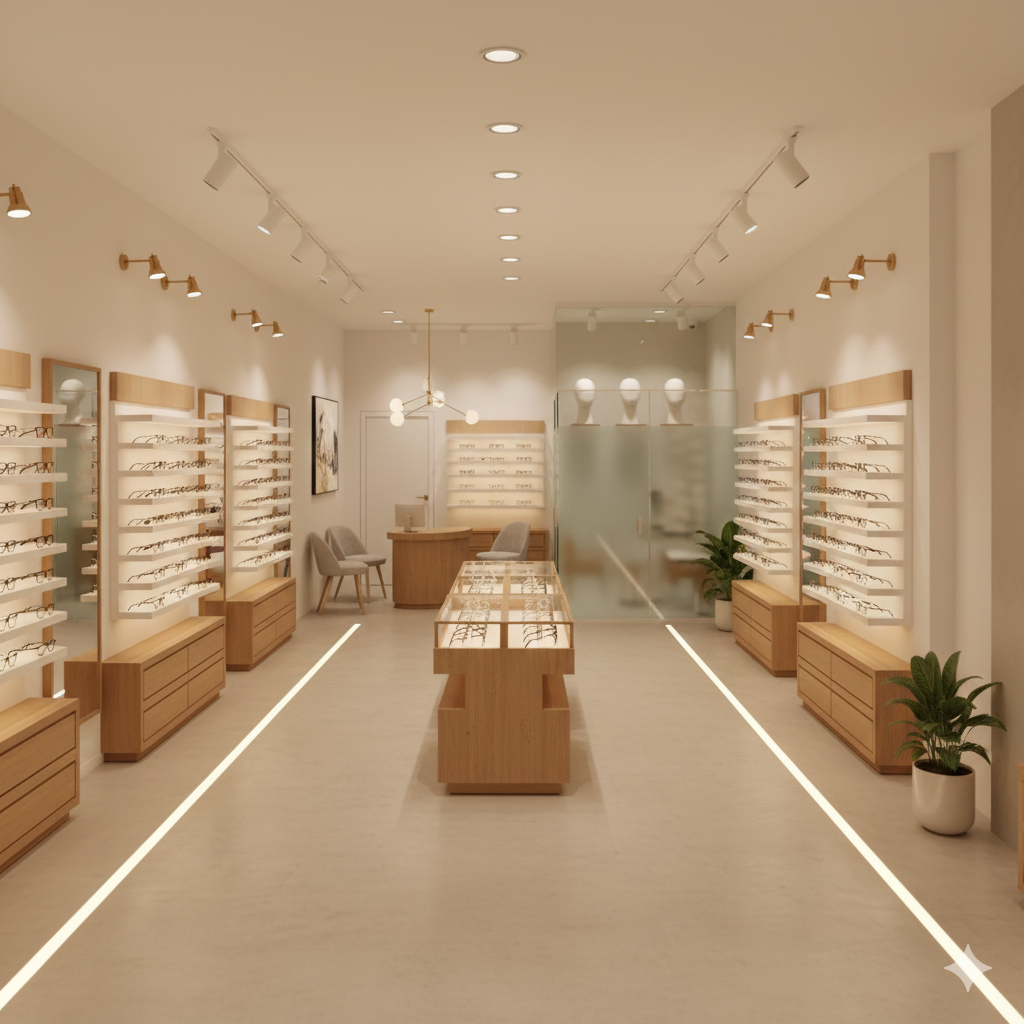
Designing a small optical store requires maximizing every square foot without making the space feel cramped. Zoning – dividing the store into functional areas – helps organize operations and enhances the customer journey.
Typical zones in a small optical store:
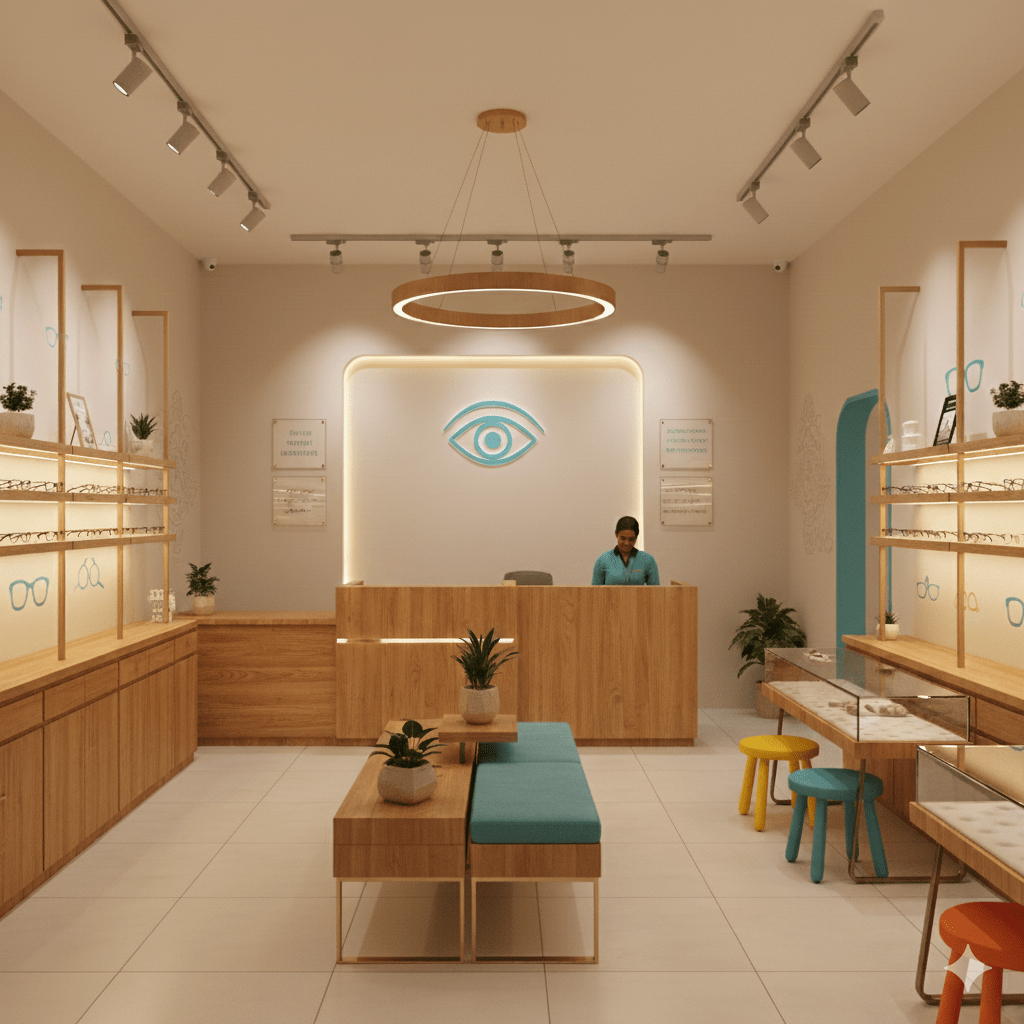
- Entrance and window display
- Reception and waiting area
- Product display and browsing area
- Consultation/testing area
- Checkout/POS counter
- Backroom/storage (if space allows)
Space allocation guidelines:
- Display and browsing: 40–50%
- Reception/waiting: 10–15%
- Consultation/testing: 15–20%
- Checkout: 5–10%
- Storage/backroom: 10–15% (or use under-counter storage)
Zoning tips:
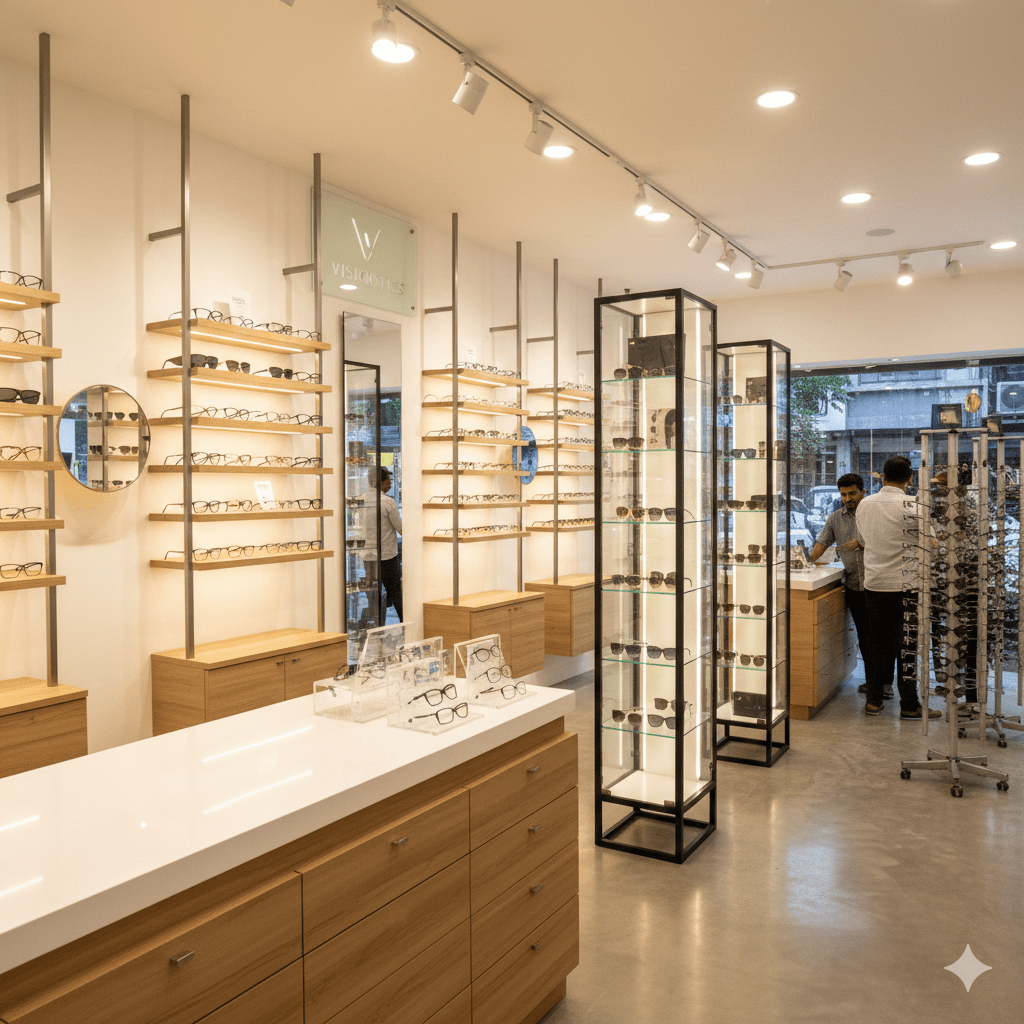
- Use open shelving and glass partitions to visually expand the space.
- Place high-traffic zones (display, reception) near the entrance.
- Tuck technical/testing areas towards the back or behind semi-private partitions.
- Ensure at least 80 cm clearance in aisles for comfortable movement.
Example: A small Indian store in Delhi NCR, uses double-sided display cabinets and a central island counter to maximize display area while maintaining a clear, navigable path for customers.
How to Design a Small Optical Retail Store
How to Design a Small Optical Retail Store
Layout and Customer Flow Strategies
A well-planned layout guides customers naturally from entry to exit, encouraging exploration and try-ons while minimizing congestion.
Popular layout types for small optical stores:
- Grid layout: Shelves and displays arranged in straight lines; efficient but can feel rigid.
- Free-flow layout: Flexible arrangement with curved paths; feels open and inviting but requires careful planning to avoid chaos.
- Loop/racetrack layout: A defined path that leads customers through all zones before reaching the checkout.
Best practices for customer flow:
- Position the reception and display area near the entrance to greet and engage customers immediately.
- Place mirrors and try-on stations along the browsing path to encourage interaction.
- Keep the consultation/testing area semi-private but accessible, using frosted glass or decorative partitions.
- Locate the checkout counter near the exit but within sight of the main display area for easy assistance.
Optimizing flow:
- Avoid bottlenecks by ensuring aisles are wide enough for two people to pass.
- Use visual cues (lighting, floor patterns, signage) to subtly direct movement.
- Regularly observe customer behavior and adjust the layout as needed for smoother navigation.
Entrance, Window Displays, and Visual Merchandising
The entrance and window display are your store’s handshake with the world. In India’s bustling retail environments, a compelling window display can be the deciding factor for walk-ins.
Effective window display strategies:
- Feature best-selling or new frames at eye level.
- Use themed or seasonal displays (e.g., “Back to School,” “Summer Sunglasses”) to keep the look fresh.
- Incorporate props, posters, and lighting to create depth and interest.
- Rotate displays every 4–8 weeks to maintain curiosity and relevance.
Visual merchandising tips:
- Group frames by style, color, or brand for easy comparison.
- Use contrasting backgrounds to make products pop.
- Integrate digital screens for virtual try-ons or promotional videos.
- Keep displays uncluttered – less is often more when it comes to luxury perception.
Indian context: Bright colors, local motifs, or Bollywood-inspired themes can resonate with customers and reinforce your brand identity. For children’s eyewear, use playful props and cartoon characters to attract families.
How to Design a Small Optical Retail Store

How to Design a Small Optical Retail Store
Reception, Waiting Area, and Consultation Zones
Reception and waiting areas set the tone for customer service. Even in small stores, a welcoming reception desk and a comfortable waiting spot are essential.
Reception area essentials:
- Place the reception desk near the entrance for easy check-in and customer greeting.
- Keep the counter clutter-free, with space for brochures, business cards, and hand sanitizer.
- Use branded elements (logo, color accents) to reinforce identity.
Waiting area tips:
- Provide 2–4 comfortable chairs or a small bench, ideally near a window or away from the main entrance.
- Offer reading material (magazines, style guides) and water.
- Use wall-mounted displays or digital screens to educate customers about eye health or promotions.
Consultation/testing zone:
- Ensure privacy with partitions or frosted glass.
- Equip with a trial lens set, autorefractor, and a clean, adjustable chair.
- Good lighting and a wall mirror are essential for accurate fitting and prescription checks.
Accessibility: Ensure all areas are accessible to seniors and people with disabilities – avoid steps, provide handrails if needed, and keep pathways clear.
How to Create a Captivating Social Media Post
How to Create a Captivating Social Media Post
How to Create a Captivating Social Media Post
How to Create a Captivating Social Media Post
Display Fixtures and Shelving Options for Eyewear
Display fixtures are the backbone of your store’s merchandising strategy. The right mix of shelving, cabinets, and stands can showcase your collection, protect inventory, and enhance the shopping experience.
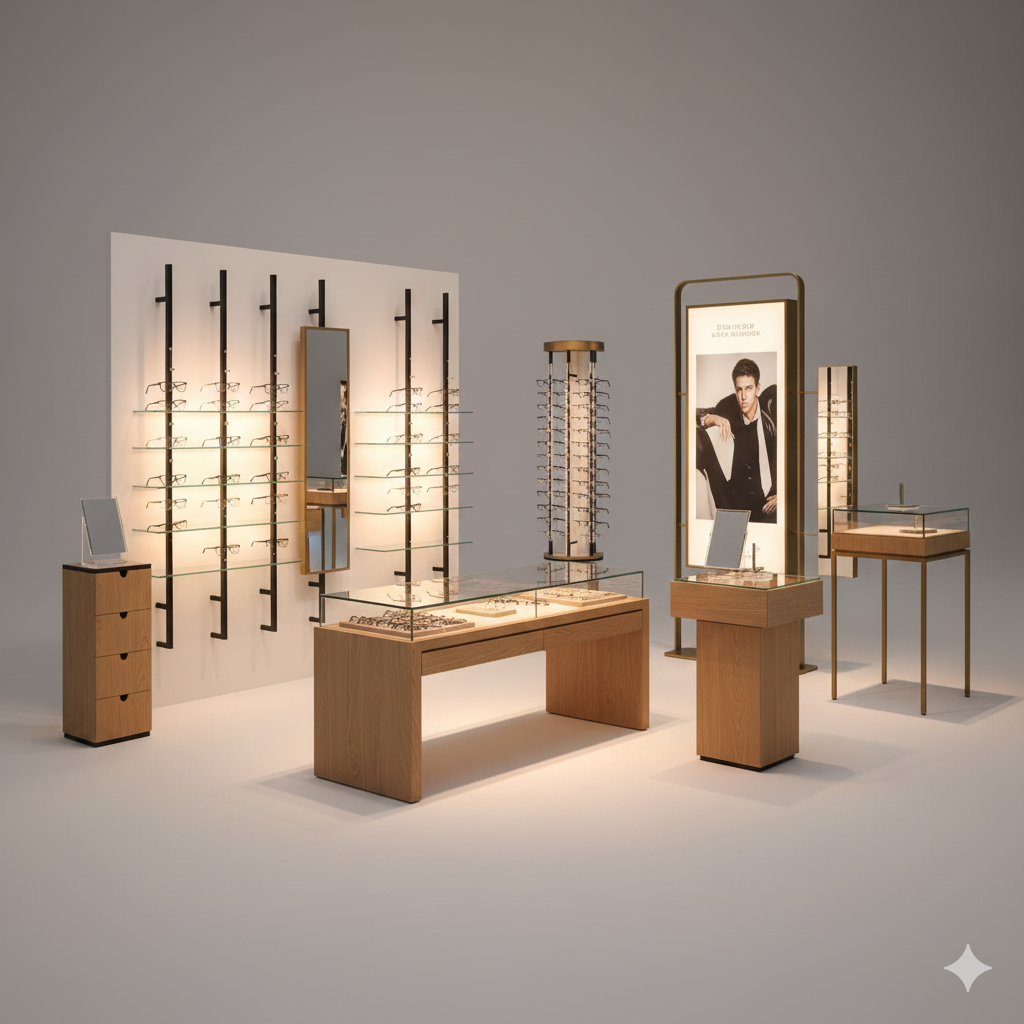
Common display fixture types:
Fixture Type | Description & Use | Pros | Cons |
Wall-mounted shelves | Fixed or modular units for frames, sunglasses | Saves floor space, organized | Limited flexibility |
Glass display cases | Lockable, illuminated cabinets for premium products | Secure, highlights luxury | Higher cost, less access |
Rotating stands | Freestanding, 360° access for multiple frames | Interactive, space-saving | Needs regular cleaning |
Countertop displays | Small units for new arrivals or promotions | Flexible, easy to update | Limited capacity |
Drawer cabinets | Under-counter storage for backup stock | Reduces clutter | Not for display |
Display Fixtures and Shelving Options for Eyewear
Display fixtures are the backbone of your store’s merchandising strategy. The right mix of shelving, cabinets, and stands can showcase your collection, protect inventory, and enhance the shopping experience.
Common display fixture types:
I. Wall-mounted shelve
Description & Use: Fixed or modular units for frames, sunglasses
Pros: Saves floor space, organized
Cons: Limited flexibility
II. Glass display cases
Description & Use: Lockable, illuminated cabinets for premium products
Pros: Secure, highlights luxury
Cons: Higher cost, less access
III. Rotating stands
Description & Use: Freestanding, 360° access for multiple frames
Pros: Interactive, space-saving
Cons: Needs regular cleaning
IV. Countertop displays
Description & Use: Small units for new arrivals or promotions
Pros: Flexible, easy to update
Cons: Limited capacity
V. Drawer cabinets
Description & Use: Under-counter storage for backup stock
Pros: Reduces clutter
Cons: Not for display
How to Create a Captivating Social Media Post
How to Create a Captivating Social Media Post
How to Create a Captivating Social Media Post
How to Create a Captivating Social Media Post
How to Create a Captivating Social Media Post
How to Create a Captivating Social Media Post
How to Create a Captivating Social Media Post
How to Create a Captivating Social Media Post
How to Design a Small Optical Retail Store
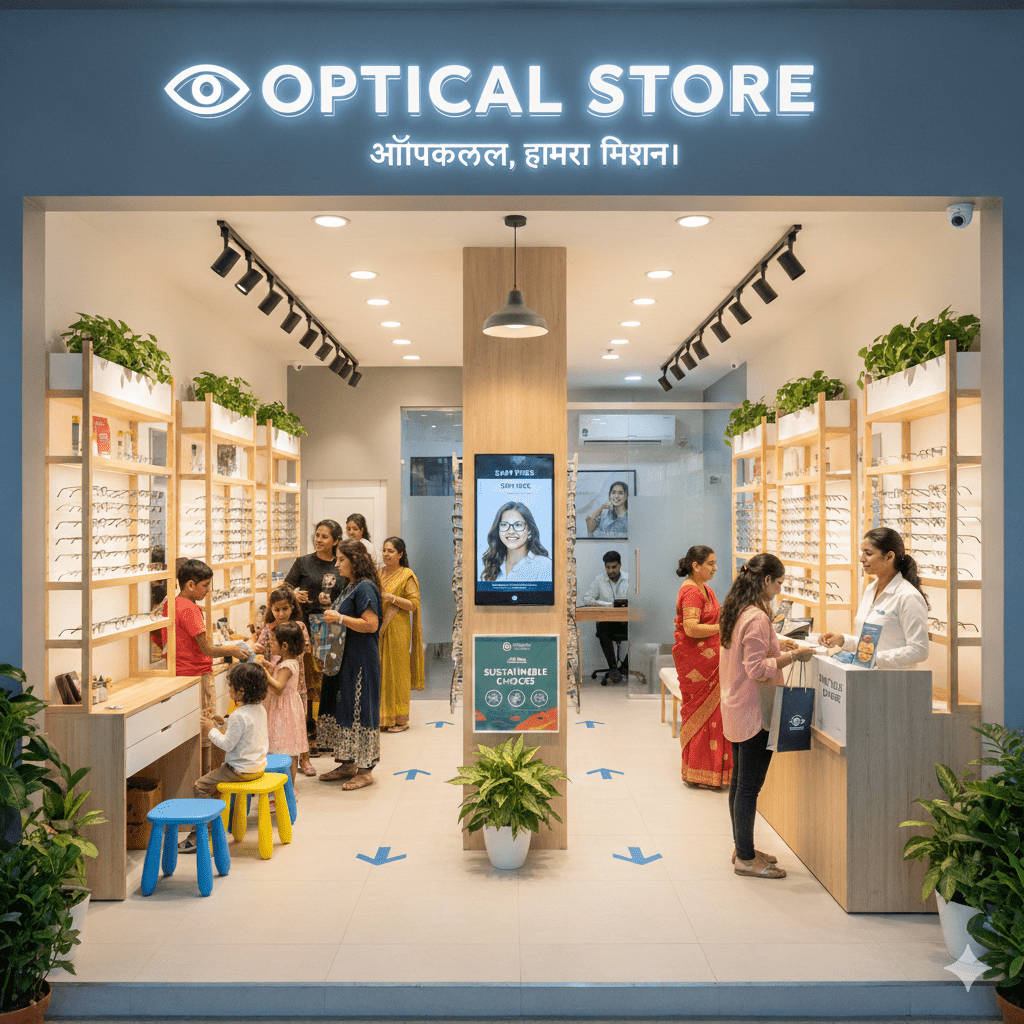
How to Design a Small Optical Retail Store
Best practices:
- Use wall-mounted displays for the bulk of your collection; keep premium or delicate items in glass cases.
- Place rotating stands near the entrance or waiting area to encourage browsing.
- Ensure all displays are at comfortable eye level (typically 120–160 cm from the floor).
- Integrate mirrors nearby for instant try-ons.
- Choose durable, easy-to-clean materials like metal, tempered glass, or high-density boards – especially important in India’s dusty, humid climate.
Customization: Modular fixtures allow you to reconfigure displays for new collections or seasonal changes, maximizing flexibility in small spaces.
How to Create a Captivating Social Media Post
How to Create a Captivating Social Media Post
How to Create a Captivating Social Media Post
How to Create a Captivating Social Media Post
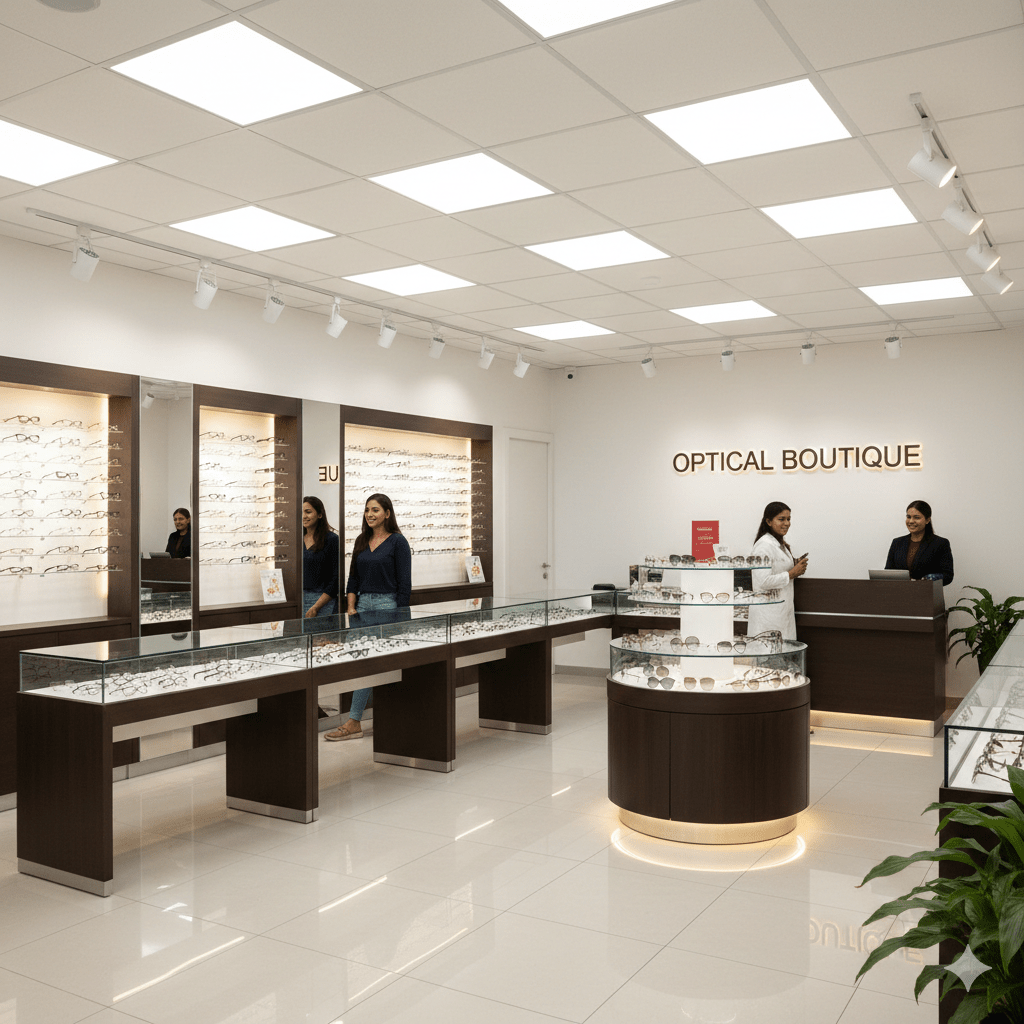
Lighting Design for Accurate Colour and Detail
Lighting is critical in an optical store. It affects how frames look, how customers perceive colors, and even their mood.
Types of lighting to consider:
- Ambient lighting: General illumination using ceiling-mounted LEDs or recessed lights.
- Task lighting: Focused lights above display cases, mirrors, and consultation areas for detailed work.
- Accent lighting: Spotlights or LED strips to highlight featured products or signage.
Lighting tips:
- Use high CRI (Color Rendering Index) LEDs (CRI 90+) to ensure true color representation – crucial for frame selection.
- Avoid harsh, direct lighting that causes glare on lenses or mirrors.
- Layer lighting – combine ambient, task, and accent sources for depth and flexibility.
- Consider motion-activated lights in display cases for energy savings and a touch of luxury.
- Use neutral color temperatures (3000–4000K) for a crisp, daylight-like effect.
Indian context: Ensure backup lighting (inverters or emergency LEDs) for power outages. Use energy-efficient fixtures to reduce electricity costs and environmental impact.
How to Create a Captivating Social Media Post
How to Create a Captivating Social Media Post
How to Create a Captivating Social Media Post
How to Create a Captivating Social Media Post
How to Design a Small Optical Retail Store
How to Design a Small Optical Retail Store
Signage, Wayfinding, and In-Store Information
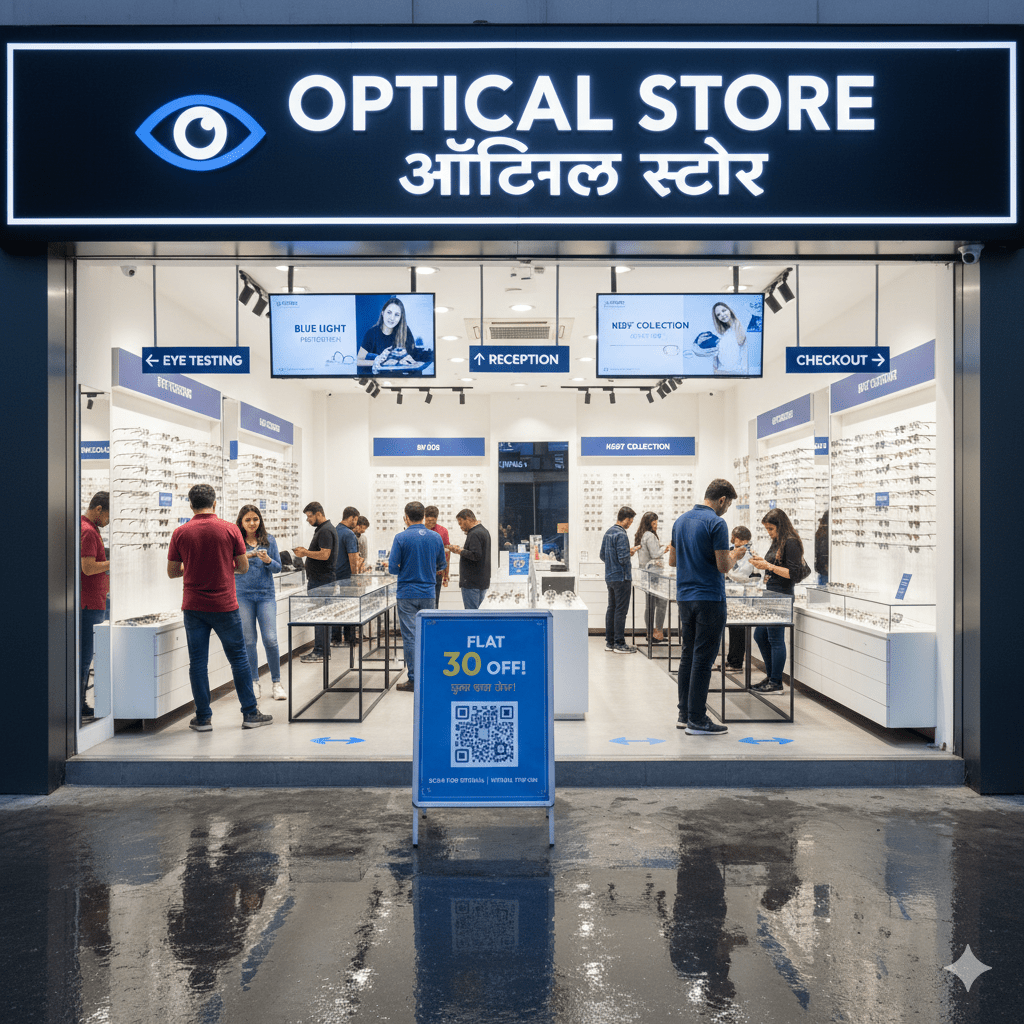
Clear signage and wayfinding are essential for a smooth customer journey. In India’s multilingual, diverse environment, signage should be simple, legible, and, where possible, bilingual.
Signage essentials:
- Exterior signboard: Large, illuminated, and visible from a distance; include your logo and store name.
- Directional signs: Guide customers to key zones (e.g., “Eye Testing,” “Reception,” “Checkout”).
- Product information: Use shelf tags or digital screens to highlight features (e.g., “Blue Light Protection,” “Kids’ Collection”).
- Promotional signage: Display offers, new arrivals, or seasonal discounts near the entrance and checkout.
Wayfinding tips:
- Use floor decals or subtle arrows to direct flow in larger stores.
- Keep signage at eye level and use high-contrast colors for readability.
- Update signs regularly to reflect current promotions or changes in layout.
Digital integration: Consider QR codes on displays for customers to access detailed product info, reviews, or virtual try-on tools via their smartphones.
How to Create a Captivating Social Media Post
How to Create a Captivating Social Media Post
How to Create a Captivating Social Media Post
How to Create a Captivating Social Media Post
How to Create a Captivating Social Media Post
How to Create a Captivating Social Media Post
How to Create a Captivating Social Media Post
How to Create a Captivating Social Media Post
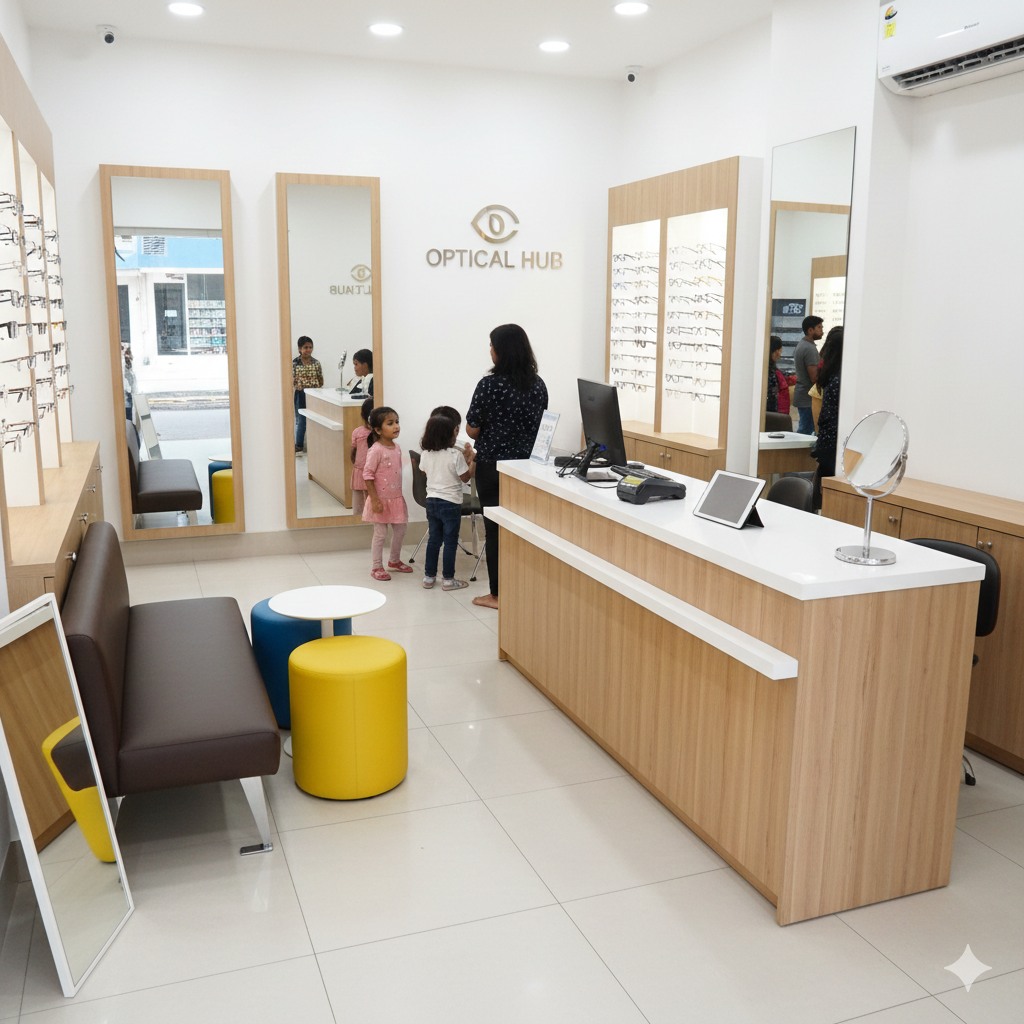
Furniture Selection: Seating, Counters, and Mirrors
Furniture in a small optical store must balance comfort, durability, and space efficiency.
Seating:
- Choose compact, sturdy chairs or benches for the waiting area.
- Upholstered seats in easy-to-clean fabrics (vinyl, leatherette) are ideal for Indian conditions.
- For children’s zones, use colorful, low-height stools.
Counters:
- Reception and checkout counters should be ergonomic, with enough space for computers, POS systems, and paperwork.
- Use under-counter storage for supplies and backup inventory.
- Consider modular counters that can be reconfigured as your business grows.
Mirrors:
- Place full-length and countertop mirrors near try-on stations and display areas.
- Use anti-glare, high-quality glass for accurate reflection.
- Consider rotating or adjustable mirrors for flexibility in small spaces.
Material selection: Opt for moisture-resistant, scratch-proof surfaces to withstand frequent cleaning and high footfall.
How to Create a Captivating Social Media Post
How to Create a Captivating Social Media Post
How to Create a Captivating Social Media Post
How to Create a Captivating Social Media Post
How to Design a Small Optical Retail Store
How to Design a Small Optical Retail Store
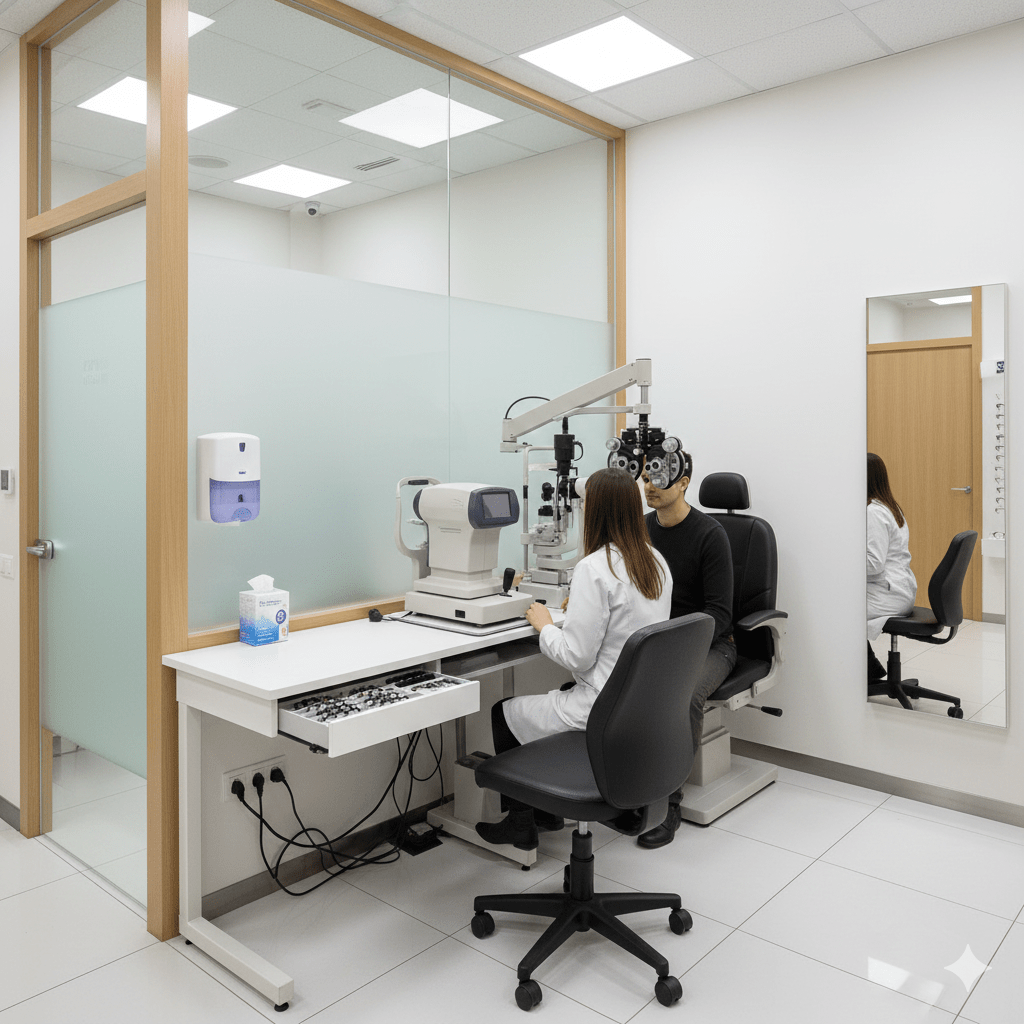
Zoning for Testing Area and Equipment Placement
A dedicated, well-equipped testing area is a hallmark of a professional optical store. Even in small spaces, privacy and hygiene are paramount.
Testing area essentials:
- Place the testing zone towards the back or behind a partition for privacy.
- Equip with an autorefractor, trial lens set, phoropter, and slit lamp (if offering comprehensive exams).
- Use a comfortable, adjustable chair and a clean, uncluttered table.
- Provide a wall-mounted mirror for frame fitting and lens inspection.
Equipment placement tips:
- Ensure easy access to power outlets and data connections.
- Use cable management solutions to avoid tripping hazards.
- Keep cleaning supplies and spare parts in a nearby drawer or cabinet.
Hygiene: Sanitize equipment after each use and provide hand sanitizer for customers and staff.
How to Create a Captivating Social Media Post
How to Create a Captivating Social Media Post
How to Create a Captivating Social Media Post
How to Create a Captivating Social Media Post
How to Create a Captivating Social Media Post
How to Create a Captivating Social Media Post
How to Create a Captivating Social Media Post
How to Create a Captivating Social Media Post
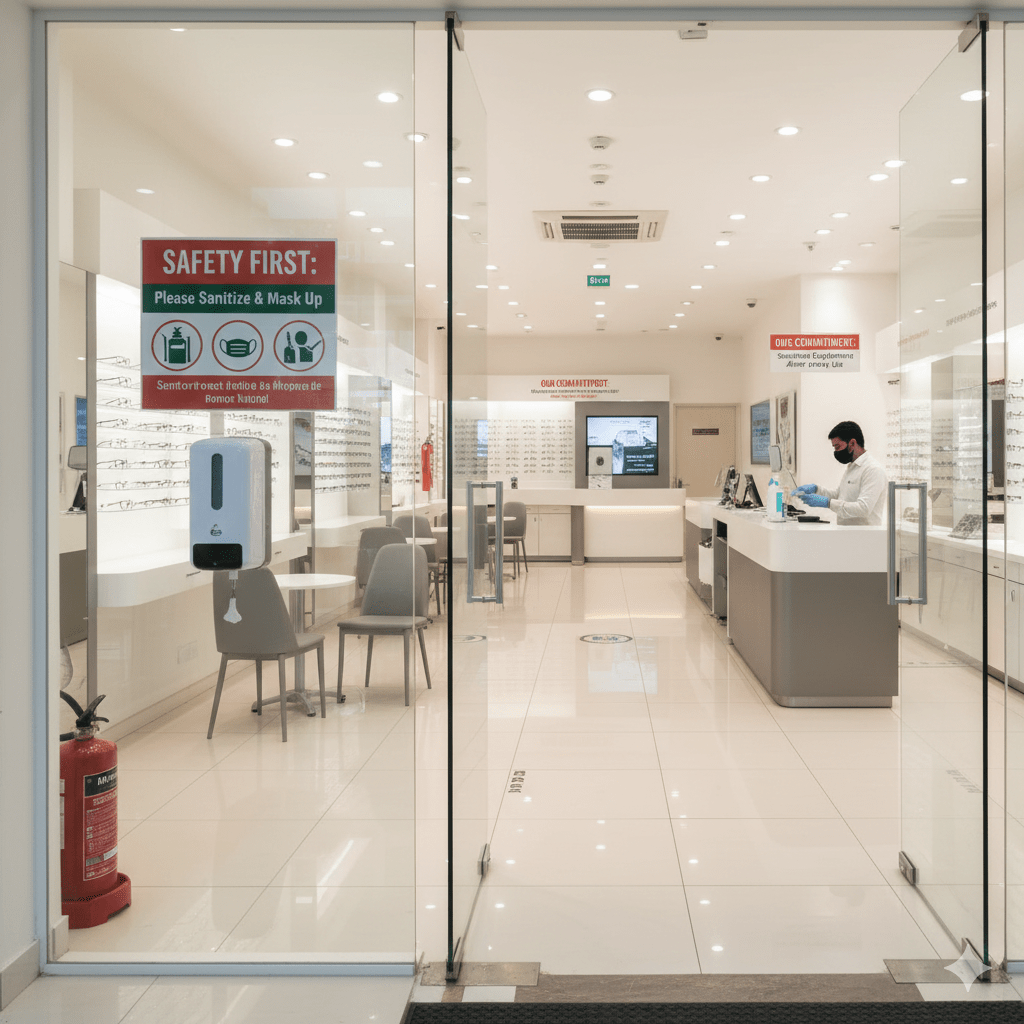
Hygiene, Safety, and Accessibility Considerations
Post-pandemic, hygiene and safety are top priorities for Indian consumers. Adhering to best practices not only protects health but also builds trust.
Hygiene protocols:
- Sanitize frames, equipment, and high-touch surfaces regularly using approved disinfectants.
- Provide hand sanitizer at the entrance, reception, and testing area.
- Use disposable gloves and masks for staff, especially during eye exams.
- Display hygiene and safety guidelines prominently for customer reassurance.
Safety measures:
- Ensure clear, unobstructed pathways to prevent slips and falls.
- Use rounded corners on furniture to minimize injury risk in tight spaces.
- Install fire extinguishers and emergency lighting as per local regulations.
Accessibility:
- Provide step-free entry and wide aisles for wheelchair users.
- Use tactile floor markers or Braille signage if serving visually impaired customers.
- Offer priority seating for seniors and pregnant women.
Compliance: Follow guidelines from the Indian Optometric Association and local health authorities for optical store operations.
How to Create a Captivating Social Media Post
How to Create a Captivating Social Media Post
How to Create a Captivating Social Media Post
How to Create a Captivating Social Media Post
How to Design a Small Optical Retail Store
How to Design a Small Optical Retail Store
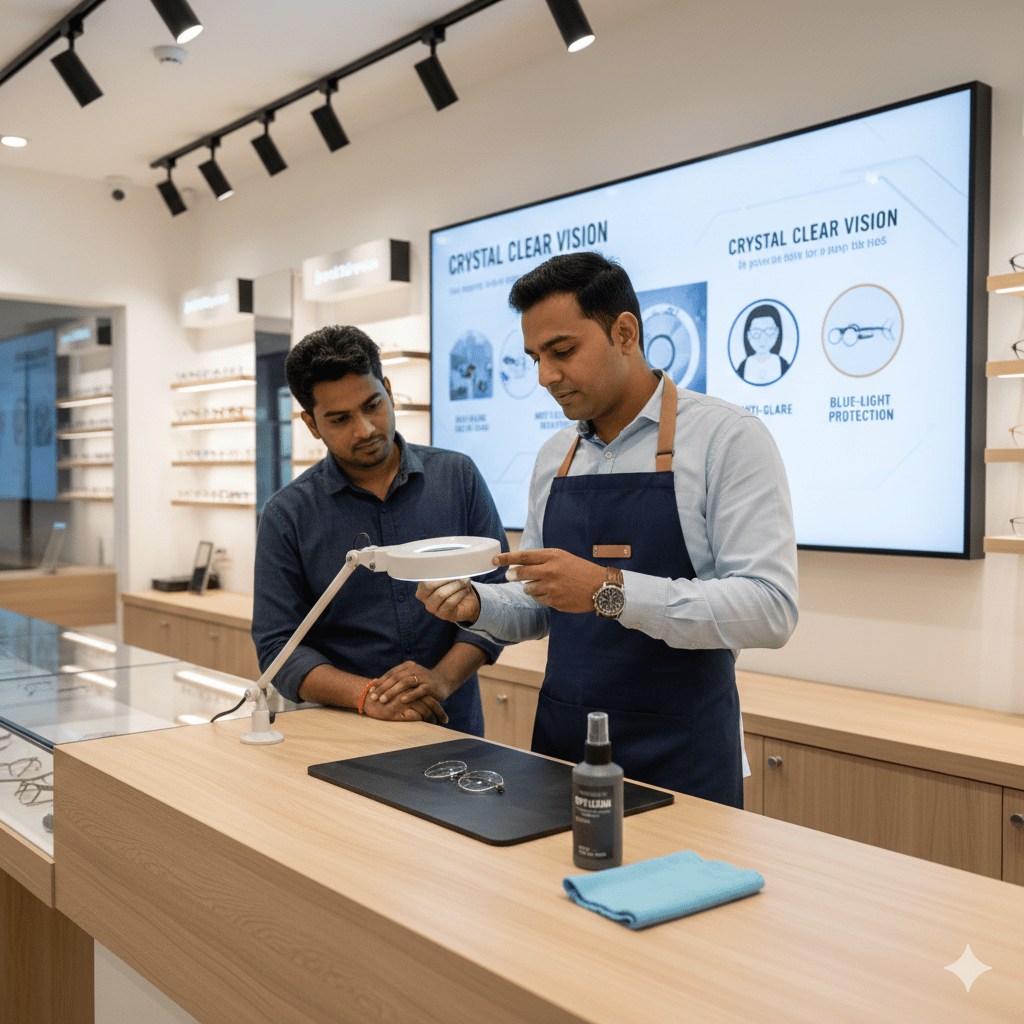
Lighting, Anti-Glare, and Lens Inspection Stations
Specialized lighting is essential for accurate lens inspection and customer comfort.
Anti-glare strategies:
- Use matte finishes on counters and display surfaces to reduce reflections.
- Position lights to avoid direct glare on mirrors and glass cases.
- Install anti-glare film on windows if the store faces direct sunlight.
Lens inspection stations:
- Provide a dedicated, well-lit spot with a magnifying lamp for checking lens quality and coatings.
- Use neutral, high-CRI lighting to reveal scratches, defects, or color inconsistencies.
- Offer a clean, soft cloth and lens cleaning solution for customer use.
Customer education: Display posters or digital screens explaining the benefits of anti-glare and blue-light-blocking lenses, helping customers make informed choices.
How to Create a Captivating Social Media Post
How to Create a Captivating Social Media Post
How to Create a Captivating Social Media Post
How to Create a Captivating Social Media Post
How to Create a Captivating Social Media Post
How to Create a Captivating Social Media Post
How to Create a Captivating Social Media Post
How to Create a Captivating Social Media Post
Display Strategies to Increase Try-Ons and Conversions
Encouraging customers to try on frames is key to boosting sales. Effective display and merchandising strategies can significantly increase conversion rates.
Proven display tactics:
- Place mirrors and try-on stations at regular intervals along the browsing path.
- Use open, accessible shelving for easy frame selection.
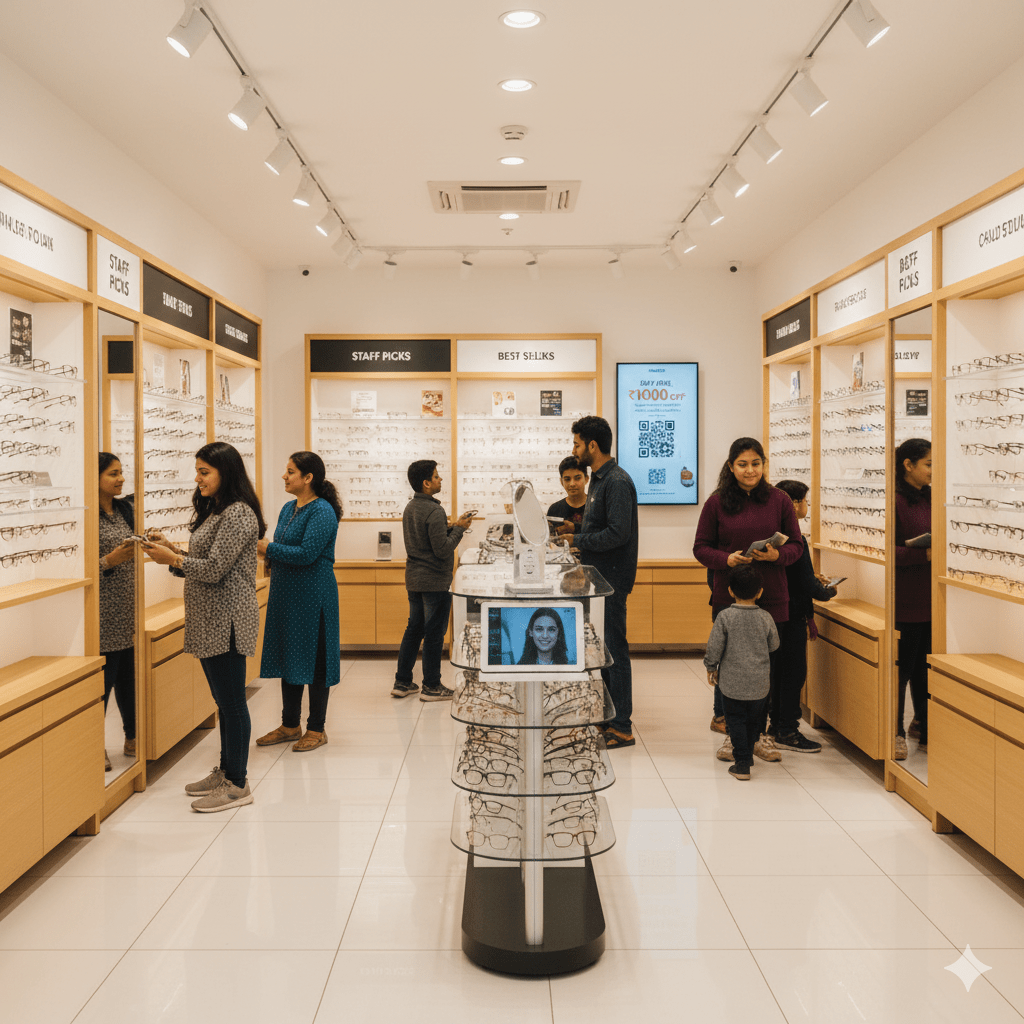
- Feature “Staff Picks” or “Best Sellers” at eye level to guide indecisive shoppers.
- Offer virtual try-on tools via tablets or QR codes for tech-savvy customers.
- Group frames by face shape, color, or occasion to simplify decision-making.
Interactive elements:
- Install digital screens for virtual try-ons or style recommendations.
- Use rotating stands to encourage hands-on exploration.
- Provide clear, easy-to-read price tags and product information.
Indian context: Highlight value-for-money options alongside premium brands to cater to diverse budgets. Offer special promotions (e.g., “Buy One, Get One Free” , “Buy one and get 1K off on next purchase”) to encourage bulk purchases for families.
How to Create a Captivating Social Media Post
How to Create a Captivating Social Media Post
How to Create a Captivating Social Media Post
How to Create a Captivating Social Media Post
How to Design a Small Optical Retail Store
How to Design a Small Optical Retail Store
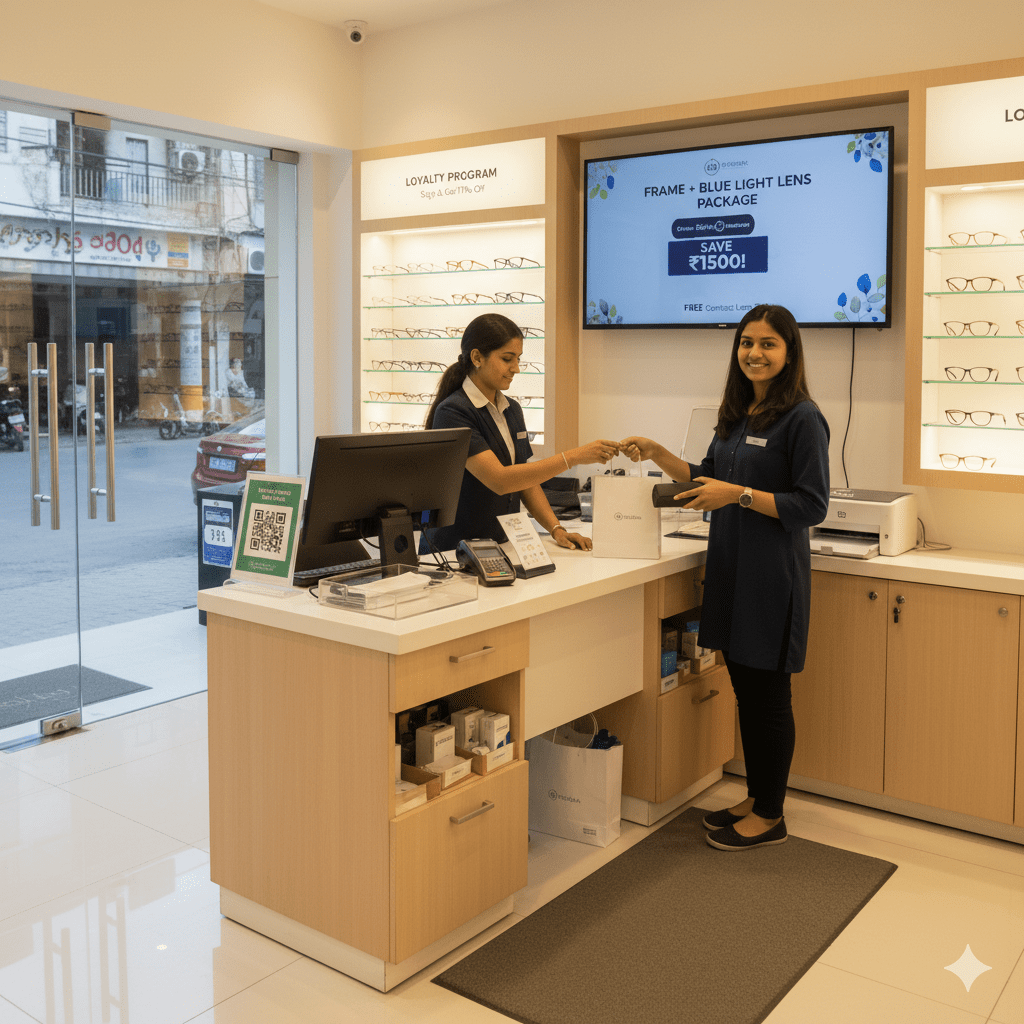
Pricing, POS Placement, and Checkout Ergonomics
The checkout area is your last touchpoint with the customer – make it efficient and memorable.
POS placement tips:
- Position the checkout counter near the exit but within view of the main display area.
- Ensure enough space for customers to queue without blocking aisles.
- Use a compact, organized counter with space for a computer, POS terminal, and packaging supplies.
Checkout ergonomics:
- Keep frequently used items (bags, cleaning cloths, receipts) within easy reach.
- Use a small tray for cash or card transactions to minimize contact.
- Offer digital payment options (UPI, credit/debit cards, wallets) for convenience.
Pricing strategies:
- Display prices clearly on shelves and tags to build trust.
- Offer bundled deals (e.g., frame + lens packages, frame + contact lens offer) for value-conscious customers.
- Use digital POS systems to track inventory, manage customer data, and streamline billing.
Customer engagement: Use the checkout moment to offer aftercare tips, loyalty program sign-ups, or feedback requests.
How to Create a Captivating Social Media Post
How to Create a Captivating Social Media Post
How to Create a Captivating Social Media Post
How to Create a Captivating Social Media Post
How to Create a Captivating Social Media Post
How to Create a Captivating Social Media Post
How to Create a Captivating Social Media Post
How to Create a Captivating Social Media Post
Branding, Colour Schemes, and Ambience
Your store’s branding and ambience shape customer perceptions and loyalty.
Branding essentials:
- Incorporate your logo, brand colors, and tagline throughout the store – on signage, counters, and packaging.
- Use consistent fonts and design elements for a professional look.
- Display certificates, awards, or customer testimonials to build credibility.
Colour scheme tips:
- Use light, neutral tones (white, beige, pale grey) for walls and ceilings to create a spacious, clean feel.
- Add pops of brand colors (blue, green, orange) in furniture, signage, or accent walls.
- For a premium look, combine wood textures with metallic accents.
Ambience creation:
- Use soft background music to enhance comfort.
- Incorporate plants or greenery for a fresh, inviting vibe.
- Adjust lighting to create a warm, welcoming atmosphere – avoid harsh, clinical brightness.
Indian context: Reflect local culture or community identity through artwork, motifs, or language in signage. For children’s zones, use playful colors and graphics.
How to Create a Captivating Social Media Post
How to Create a Captivating Social Media Post
How to Create a Captivating Social Media Post
How to Create a Captivating Social Media Post
How to Design a Small Optical Retail Store
How to Design a Small Optical Retail Store
Mirrors, Trial Areas, and Customer Privacy
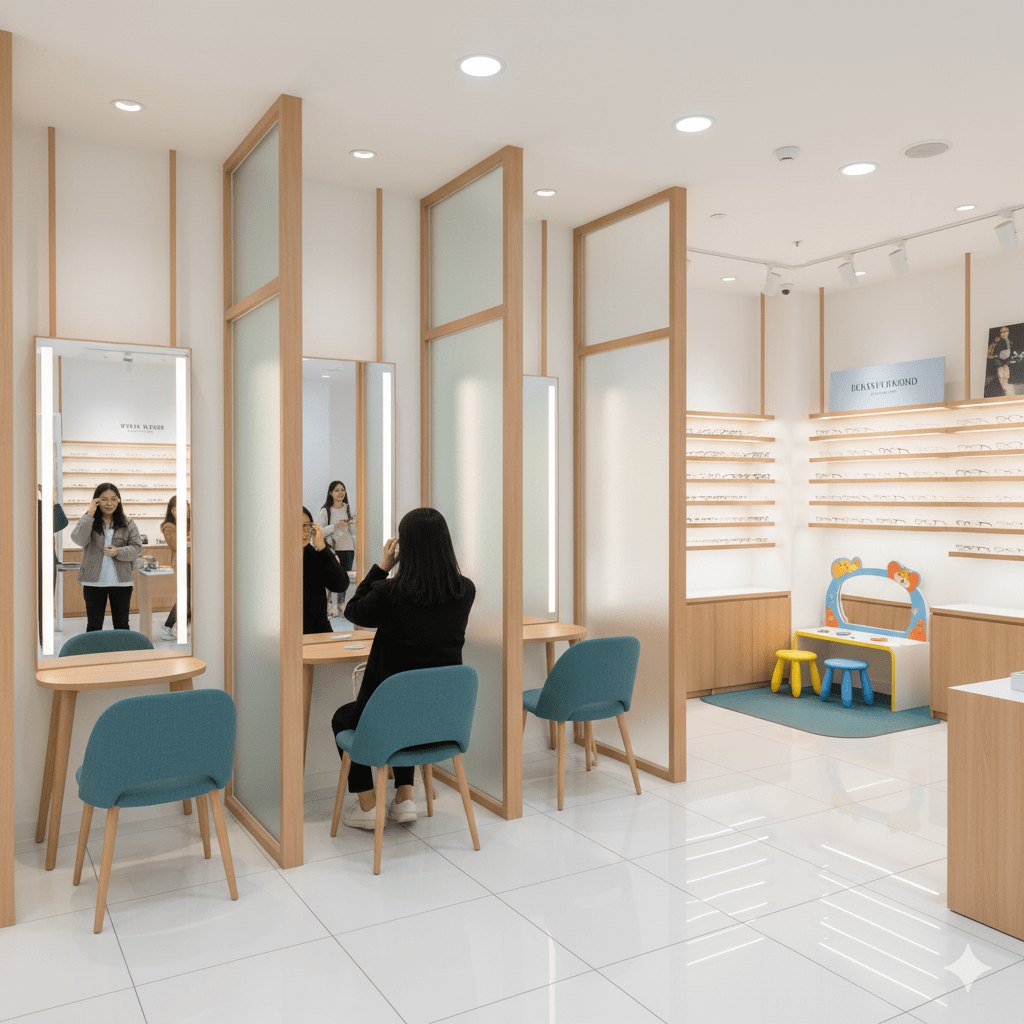
Trying on frames is a personal experience – privacy and comfort matter.
Mirror placement:
- Install full-length mirrors near try-on stations and display areas.
- Use countertop mirrors at reception and consultation desks.
- Ensure mirrors are clean, well-lit, and free from obstructions.
Trial area design:
- Provide a semi-private space for customers to try on frames, especially for those who value discretion.
- Use partitions, frosted glass, or decorative screens to create separation without closing off the space.
- Offer seating and a small table for customers to place personal items.
Privacy tips:
- Avoid direct sightlines from the entrance to the trial area.
- Use soft, diffused lighting to flatter skin tones and reduce self-consciousness.
- For children or families, provide a dedicated corner with playful decor and smaller mirrors.
How to Create a Captivating Social Media Post
How to Create a Captivating Social Media Post
How to Create a Captivating Social Media Post
How to Create a Captivating Social Media Post
How to Create a Captivating Social Media Post
How to Create a Captivating Social Media Post
How to Create a Captivating Social Media Post
How to Create a Captivating Social Media Post
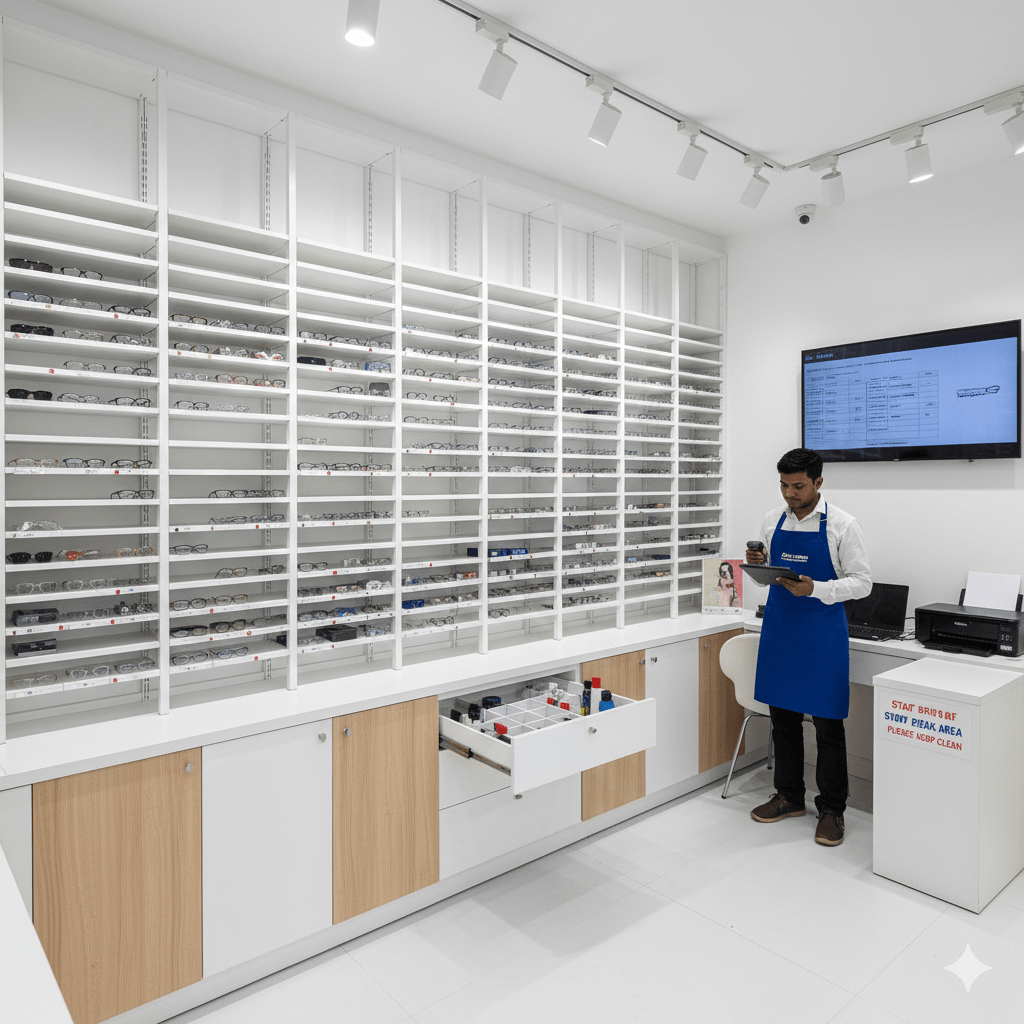
Staff Workflow, Backroom, and Inventory Management
Efficient staff workflow and inventory management are vital for smooth operations.
Backroom/storage tips:
- Use under-counter drawers, wall-mounted cabinets, or vertical shelving to maximize storage in small spaces.
- Keep backup stock, cleaning supplies, and repair tools organized and easily accessible.
- Designate a small area for staff breaks or administrative tasks, if possible.
Workflow optimization:
- Plan staff movement paths to minimize cross-traffic and congestion.
- Use digital inventory management systems to track stock levels, reorder points, and sales trends.
- Train staff in product knowledge, customer service, and hygiene protocols.
Inventory best practices:
- Rotate stock regularly to keep displays fresh.
- Store high-value items securely in lockable cabinets.
- Maintain a clean, clutter-free workspace to enhance efficiency and safety.
How to Create a Captivating Social Media Post
How to Create a Captivating Social Media Post
How to Create a Captivating Social Media Post
How to Create a Captivating Social Media Post
How to Design a Small Optical Retail Store
How to Design a Small Optical Retail Store
Budgeting and Cost-Saving Tips for First-Time Owners
Starting an optical store requires careful budgeting and smart spending.
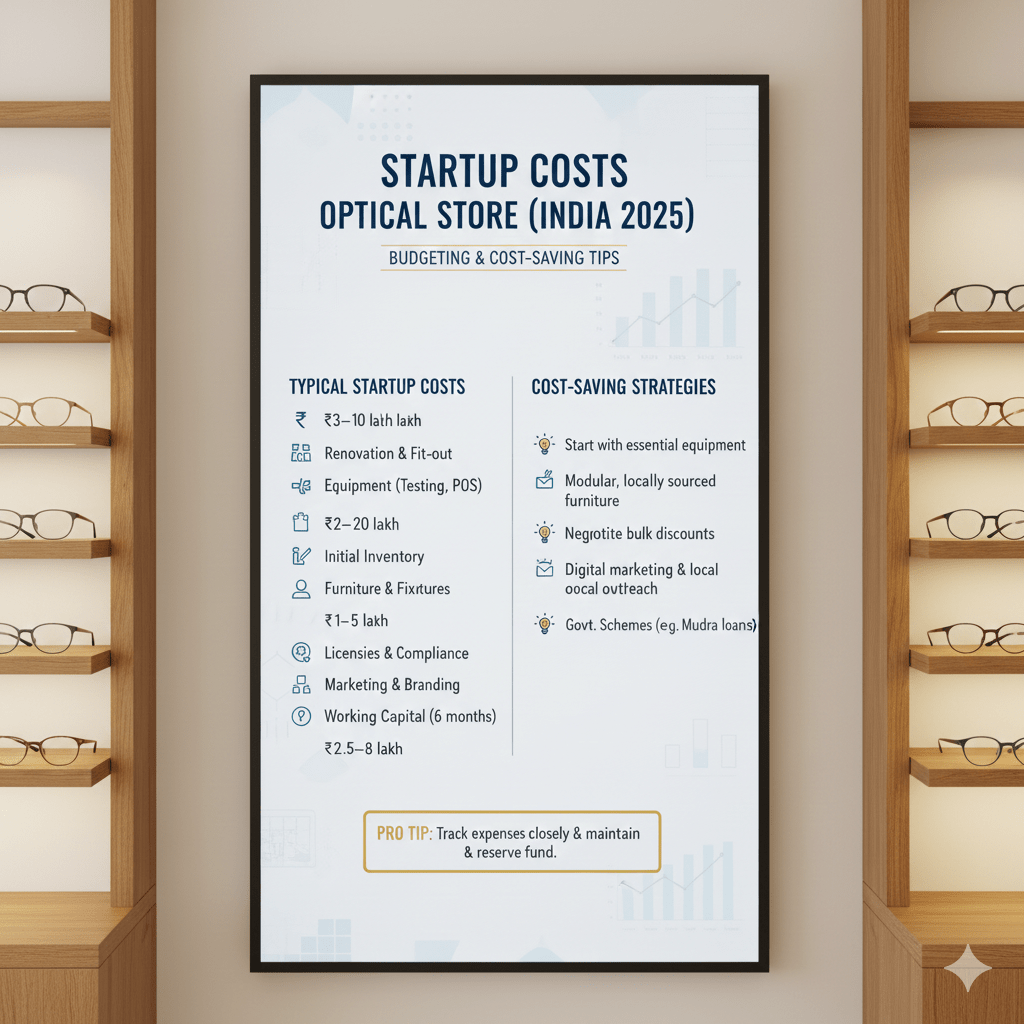
Typical startup costs (India, 2025):
- Retail space (annual lease): ₹30K–10 lakh
- Renovation and fit-out: ₹1.5–10 lakh
- Equipment (testing, POS): ₹2–20 lakh
- Initial inventory: ₹1.5–15 lakh
- Furniture and fixtures: ₹1–5 lakh
- Licenses and compliance: ₹0.3–1.5 lakh
- Marketing and branding: ₹0.5–5 lakh
- Working capital (6 months): ₹2.5–8 lakh
Cost-saving strategies:
- Start with essential equipment and expand as business grows.
- Use modular, locally sourced furniture to reduce costs.
- Negotiate with suppliers for bulk discounts or consignment inventory.
- Leverage digital marketing and local outreach for affordable promotion.
- Apply for government schemes (e.g., Mudra loans) for small business support.
Pro tip: Track expenses closely and maintain a reserve fund for unexpected costs.
How to Create a Captivating Social Media Post
How to Create a Captivating Social Media Post
How to Create a Captivating Social Media Post
How to Create a Captivating Social Media Post
How to Create a Captivating Social Media Post
How to Create a Captivating Social Media Post
How to Create a Captivating Social Media Post
How to Create a Captivating Social Media Post
Marketing and Local Outreach for Indian Customers
Effective marketing is crucial for attracting and retaining customers.
Local marketing strategies:
- Google Business Profile: Ensure your store appears in local searches and Google Maps; update regularly with photos, timings, and offers.
- Local SEO: Use town-based keywords (e.g., “optical store in Jayanagar”) on your website and social media.
- Social media: Showcase new arrivals, customer testimonials, and promotions on Instagram, Facebook, and WhatsApp.
- Collaborations: Partner with nearby clinics, schools, or community centers for referral programs or eye camps.
- Events: Host free eye check-up camps, style workshops, or children’s vision awareness days in education institutions/ residential areas etc.
Customer engagement:
- Encourage reviews and feedback online and in-store.
- Offer loyalty programs or referral discounts.
- Use SMS or WhatsApp to notify customers of new collections or special offers.
Indian context: Word-of-mouth and community reputation remain powerful – deliver exceptional service to turn customers into brand ambassadors.
How to Create a Captivating Social Media Post
How to Create a Captivating Social Media Post
How to Create a Captivating Social Media Post
How to Create a Captivating Social Media Post

How to Design a Small Optical Retail Store
How to Design a Small Optical Retail Store
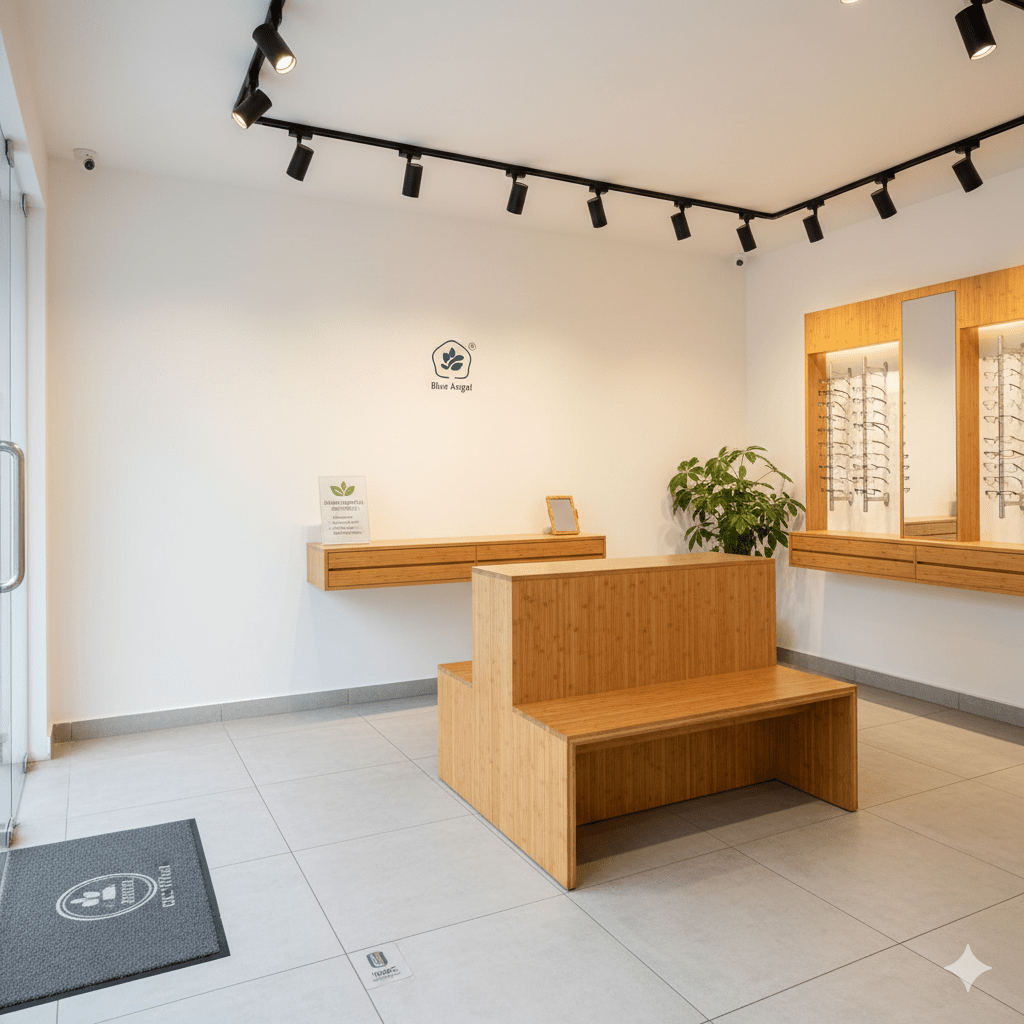
Sustainability and Materials Selection
Sustainable design is increasingly important for Indian consumers and businesses.
Eco-friendly practices:
- Use FSC- or PEFC-certified wood, bamboo ply, or recycled materials for furniture and fixtures.
- Opt for low-VOC paints and adhesives to improve indoor air quality.
- Install energy-efficient LED lighting and motion sensors to reduce power consumption.
- Choose modular, reusable fixtures to minimize waste during renovations.
- Source materials locally to reduce transportation emissions and support local economies.
Certifications to look for:
- FSC, PEFC (wood)
- Cradle to Cradle, Blue Angel (materials)
- IGBC (sustainable interiors)
Communicate your commitment: Use signage or digital displays to inform customers about your sustainable choices, building trust and brand value.
How to Create a Captivating Social Media Post
How to Create a Captivating Social Media Post
How to Create a Captivating Social Media Post
How to Create a Captivating Social Media Post
How to Create a Captivating Social Media Post
How to Create a Captivating Social Media Post
How to Create a Captivating Social Media Post
How to Create a Captivating Social Media Post
Maintenance, Cleaning, and Long-Term Upkeep
Regular maintenance ensures your store remains inviting and hygienic.
Daily tasks:
- Clean floors, surfaces, and display cases with approved disinfectants.
- Wipe down frames and mirrors to remove fingerprints and dust.
- Sanitize high-touch areas (handles, counters, POS terminals).
Weekly/monthly tasks:
- Inspect and tighten screws on furniture and fixtures.
- Check lighting and replace faulty bulbs promptly.
- Deep-clean upholstery and carpets as needed.
Eyewear maintenance:
- Clean demo frames with lens-safe solutions after each try-on.
- Store backup inventory in dust-free, organized drawers.
- Offer professional cleaning and adjustment services for customer eyewear.
Pro tip: Schedule annual professional inspections for equipment and deep cleaning for long-term durability.
How to Create a Captivating Social Media Post
How to Create a Captivating Social Media Post
How to Create a Captivating Social Media Post
How to Create a Captivating Social Media Post

How to Design a Small Optical Retail Store
How to Design a Small Optical Retail Store
Conclusion: Your Vision, Brought to Life
Designing a small optical retail store in India is both a challenge and an opportunity. By focusing on customer flow, strategic zoning, effective displays, and a welcoming ambience, you can create a space that delights customers and drives business growth. Remember to prioritize hygiene, accessibility, and sustainability, and to leverage local marketing and community engagement for long-term success.
Key takeaways:
- Plan your layout and zones carefully to maximize space and efficiency.
- Invest in quality lighting, signage, and modular fixtures for flexibility and impact.
- Prioritize customer comfort, privacy, and accessibility at every touchpoint.
- Maintain high standards of hygiene and safety to build trust.
- Embrace sustainability and local partnerships to future-proof your business.
With thoughtful design and a customer-first mindset, your small optical store can become a trusted destination for vision care and style in your community. Good luck on your entrepreneurial journey – may your vision be clear and your store shine bright!
How to Create a Captivating Social Media Post
How to Create a Captivating Social Media Post
How to Create a Captivating Social Media Post
How to Create a Captivating Social Media Post
How to Create a Captivating Social Media Post
How to Create a Captivating Social Media Post
How to Create a Captivating Social Media Post
How to Create a Captivating Social Media Post
Key Takeaways for First-Time Optical Store Owners:
- Start with a clear plan: Define your target audience, budget, and brand identity before designing.
- Maximize every inch: Use modular, multi-functional furniture and fixtures to make the most of small spaces.
- Prioritize customer experience: Smooth flow, comfortable seating, and engaging displays drive sales and loyalty.
- Stay flexible: Choose designs and suppliers that allow for easy updates as your business grows.
- Invest in hygiene and sustainability: These are not just trends – they are essentials for modern retail success in India.
Disclaimer:
This blog is created for general informational purposes only. The facts, figures, and insights shared are based on publicly available data and industry observations. They should not be considered financial, legal, or professional advice. Optical store owners are encouraged to use their own judgment and consult relevant experts before making business decisions.
Images used in this blog may have been generated with the help of artificial intelligence. These visuals are illustrative in nature and do not represent actual stores, products, or individuals. While every effort has been made to ensure accuracy and clarity, the author does not guarantee completeness or assume responsibility for outcomes based on this content.